Monday, January 13, 2020

Seno Iceberg is not aptly named

One of the reasons I dragged Karina down here (kicking and screaming, I might add) is to view the majestic icefields of  Patagonia.  We had a small taste last year at Laguna San Rafael where we reached the edge of the northern part of the ice field.  Later this year we plan to reach the south end of the southern icefield but unwilling to wait I took Sea Rover (and Karina) on a small diversion to get a first glimpse of this force of nature.

Brrr...  Maybe Seno Iceberg is aptly named after all...  It's cold here!
We headed east down a channel marked Seno Iceberg.  The name alone conjures up views of titanic sized frozen chunks of blue and white water.  Things got off to a good start when our instruments showed the water temperature quickly dropping.  12 degrees C -10 - 7 - 4!!!  The water turned a classic turquoise green.  This was going to be great!

Then the wind started to pick up.  Our instruments were showing the wind increasing as fast as the water temperature was decreasing...  5 knots - 10 - 17 -25 -30!!!  The water turned a classic turquoise green with white ribbons of foam.  Maybe this wasn't such a good idea!

I had visions of Sea Rover being blown down the channel where she would meet her maker smashed on the hard blue wall sure to be at the end of the fjord.  After being squashed on the wall, I was sure that huge chunks of 1000 year old ice also being blown east would finish us off and if that didn't do us in surely the house sized calving blocks of ice from above would.  It was sleeting sideways and we could see nothing but grey.  It was time to pull into a safe anchorage and reassess.

Southern Patagonia Icefield only 5 NM away
We found a nice bay where the wind dropped down to 20 knots and set our anchor.  We went below and warmed up in the balmy 12 degree C boat.  After some lunch we noticed the rain had slowed and we could see the end of the bay about 5 miles south.  The wind seemed to be calming down as well.  We tied Sea Rover into the cove and donned our survival suits.  After prepping "Pearl" (our dinghy) for the voyage down to the glacier, we were just about to head off when we noticed another grey wall coming from the west.  We retreated back to the cockpit and waited another half hour for the next window.  When it came, we were now ready.


Wow, we made it right to the face of a glacier!

As soon as the squall passed us we raced down bay in an effort to get there and back before the next squall.  As the scenery flew by, I was making mental notes of where we might take refuge should our timing be off.  Despite a small issue with our new dinghy chaps trying to sink the dinghy (modifications will be required) we made it right to the face of the glacier in good time.

Last year in Laguna San Rafael we couldn't get within 5 miles of the glacier due to all the bergy bits blocking our forward progress.  Now we were standing on a small rock less than 100 m away from the towering face.  Where were the icebergs?  Upon closer inspection we realized that very little of the glacier is actually still in the water.
Danger Gary posing in front of the glacier

Glacier Tempano is no longer really a "tidewater" glacier.  Like Jorge Montt glacier just to the north, it is one of the fastest receding glaciers in the world.  In 2014 a careful study of Jorge Montt revealed the ice depth lost 30 m on average.  Between 2016 and 2014 the face has moved 1.5 km further back.  We can attest first hand experience having seen cruiser friends photos of this exact spot and its change in just a few years.

Unwilling Karina posing in front of the glacier
After careful coaxing, Karina joined me on the small rock and we quickly took a few last photos to prove we were both there.  While small chunks fell off the face and crashed on to the beach below (no ice fall tsunamis here) we grabbed a piece of 1000 year old ice and jumped back in the dinghy in an attempt to race back up the strait and the safety of Sea Rover before the next squall hit us.

Can we make it back to the boat before the next squall?!?!?
Shortly after leaving the face, the rain began again but the waves weren't too bad from the increased winds and we had the company of dolphins playing in the dinghys bow wave 5 or 6 inches from Karina's face.  Comfortably and reasonably dry in our survival suits we trekked back to the boat happy that our worries about the excursion were unfounded.

Last month was Chile was supposed to have hosted the world climate summit.  Perhaps if Greta had come here the world would know more about how fast history is melting away.  In the time it took us to motor back to Sea Rover from the face of the glacier, our 1000 year old piece of ice was gone.


1000 year old ice gone before we could make it back to the boat.
Yet another example that climate change is REAL!

Wednesday, January 8, 2020

Tortel: An Unexpected Gem

All things that are good in life require some sort of hardship right???  Well despite the "Odyssey" required to arrive in Tortel, we were not disappointed.
Remember when I talked about the landscape like this:

Water and Rock

And This:

Water and Rock
 And This:

Rock and Water

Well given those images you would assume it's impossible for any sort of community to survive in this area.  Tortel is not only surviving, it's thriving.  This quaint village of about 500 people is a maze of boardwalks and stairs with well-kept homes nestled in between.

Tortel is Cute!  (Gary... not so much)

In fact, the boardwalks are the secret to how they’ve managed to create a village in this environment.   There are no areas flat enough to build roads and any footpaths would be quickly washed away let alone impossible to keep from becoming a boggy mess.  Homes are built above and over the land, not on it so there is no need to clear or level anything.

Who needs flat ground when you can build on platforms

The single road comes in well above the village so everything you need to live on requires it to be carried down at least 200m of stairs to the waters edge where you can either wheelbarrow it along the various 7 km of boardwalks or cheat and catch a water taxi to the closest point of your home.  This includes the materials (wood, windows appliance etc) needed to build your home.

Sea Rover set up for Patagonia with Tortel in the background.
The single road to town ends at the top of that hill!

We think there is a thriving history of industrious individuals who sustain their living expenses by carrying your stuff for you.  In fact they've built a shrine for them...

Everything needed to live here is carried on their backs

We haven't (and won’t be able to) spent enough time here to discover what keeps people busy here but at a glance it seems to cater to the few tourists who are adventurous enough to get here.  

Great carvers live here

There are various artisanal carving shops who seem to do excellent work and a few small stores and "restaurants".  Given the very short tourist season here we expect there is more to this place but alas, the south is calling and we must move on.  


Public art in Tortel

At a minimum there must be a fairly good number of people employed to keep the many many kilometers of wooden boardwalks from reverting back to the landscape the came from.

The boardwalks here must require constant maintenance

For the naturalists in our audience, you’ll be pleased to know you can find the worlds largest bee here.  This web page here lists them as extremely rare and almost extinct but we found them all over.

Bombus dahlbomii.  A very big bee!

You can also find hummingbirds the size of crows (ok only 9 inches tall)...  But they were too fast for us to get a good picture for proof… 

If you ever find yourself in the south of Chile, take the detour and visit this place.  You won’t be disappointed….  Unless you are looking for diesel and then despite what the guide book says, you are out of luck.
Don't forget to grab a map when you arrive...  Its easy to get lost here.


Sunday, January 5, 2020

Tortel: Sea Rover’s Odyssey


 In our last post we spent a long time describing how remote we were and how difficult it would be to live in this area.  We had decided to take a detour of about 100NM to Tortel but had no idea what we would find when we got here.

Who knew it would only take an Odyssey similar to Homer’s complete with Sea Monsters and the plague to get here.    For those who wish to follow in our footsteps, here is a guide to sailing to Tortel.

Step 1, Fight off the Harpies:  Upon entering the Strait of Monsters, (AKA Canal Martinez) you will find invisible harpies (AKA Rachas) that come out of the sky and attack the boat at random.   They seem to be especially attracted to large amounts of sail so keeping a minimum sail area is essential even if the wind is only blowing 5 or 10 knots.

Naming your boat the Invincible wont help
against the Harpies
    
Step 2, Beat the Giant Squid:  This is also where giant squids attach to the bottom in an effort to drag you back to their lair.  These extremely intelligent animals (AKA Currents) are warry of being seen by humans so if your boat is slowed down to moving forward at only 2 knots a simple glance at the stern in not enough.  You must run from side to side and fore and aft as quickly as possible to catch a glimpse of him below as he moves out of your sight.  The reality is that even if you do see him there isn’t anything you can do to free yourself so you must continue to push forward at a painfully slow pace.

You will never see the Giant squid attached to your bottom
no matter where you look

Step 3, Survive the Plague of Flies:  When it’s not blowing 30 or 40 knots, small black flies that are happy at breezes below 30 knots (we think they are a secret Chilean genetic engineering project to protect their extensive coastline) come out in droves.   We thought heavy rain would keep them at bay but alas, this does not deter them.  Luckily their bite only itches for a few weeks and leaves a scar so the toll isn’t too high.

Even the bees are giant here

Step 4, Don’t drown in the Great flood:  We already have a sailboat so we didn’t need to build one but MAN DOES IT RAIN here.

Rain makes everything look better doesn't it!

Step 5, Sacrifice your wife to the Dragon:  When the Harpies go away, don’t even think of being complacent.  They were scared away by the DRAGON.  Yes, this creature, also invisible, scares away the Harpies and waits patiently until the sailor thinks he is safe.  He hovers until more sail is made and then WHAM he hits with a fury until you lash your wife to the mast in the torrential downpour and crashing seas as a sacrifice.

She had no idea of what was about to happen...

It is only then that the oasis of Tortel comes into view and you can relax for a little while. That is until you realize the only way out is the way you came in and you must do it all over again.
For those who care...  Yes, the Dragon gave her back.

Thursday, January 2, 2020

Gulfo de Penas... Done!

Well, our penance paid previous to the Penas passage paid off :)
The crossing, despite the big seas was reasonably uneventful and we made it to anchor slightly before lunch. The only down side was the Champagne had to wait until dinner and the bacon was consumed this morning.
We've decided to detour to a small village inland called Tortel so we should be able to post a few pics from there in a few days. Until then you will have to be content with a word description of the area.

Having crossed the Gulf, the scenery has changed quite a bit. We saw this change slightly when we first crossed south of Chiloe back in the beginning of December. Around Chiloe the views are rolling pastoral hillsides with gentle hues of green. Off in the distance you could see the giant snow capped peaks and volcanoes but they seemed too far away to touch. Cute, brightly coloured homes, churches and small villages could be seen scattered everywhere. Small boat traffic was common. Once south of Chiloe into the start of the Patagonian channels the rolling hillsides vanished, to be replaced with towering cypress-covered spires. The forests seemed impenetrable and surely nobody could live here. Aside from 3 or 4 small villages and a few isolated hermits this is true. Land farming is replaced by fish farms, which cling to the hillsides as they spring from the ocean. Boat traffic is only for boats bigger than ours, and much less frequent. The snow covered peaks are close enough to touch just above the dark green hills.

Now we are south of Gulfo de Penas and it seems that even the trees have a harsh life. Living here would be extremely difficult - so nobody does. Fish farms may exist here but there are so many inlets and bays you'd need to know where to look to find them. Once out of the main channel south, boat traffic (aside from us) is non-existent. Everywhere we look all we see are giant, granite domes teaming with white waterfalls. This area was covered by glaciers not very long ago. As we continue south the glaciers will come down to greet us. Right now, satellite photos are the only reason we know glaciers are around us as the channels are too narrow and steep to see much past the polished domes before they vanish into the clouds. The constant torrential downpours that cut visibility to zero doesn't help either.

It feels like we are the only beings left in the world... In fact, it is quite likely that we are the only humans within a 50 mile radius. How many places on Earth can you say that?
A big milestone (crossing Gulfo de Penas) has been achieved, but we still have many more before we reach Puerto Williams. Stay tuned.

Monday, December 30, 2019

Crossing the Gulf

So when planning the trip south this year, one of the big obstacles to overcome is Gulfo de Penas. Also known as the gulf of Penance/Pain... We have friends who purposely mispronounce it "The Gulf of Penis"... You get the idea. Last Thursday we finished getting the boat fixed and we noticed the possibility of a weather window today or tomorrow so we've put in 50 NM days since then to get in position in time. Yesterday was not noted as part of the "good" weather window for the crossing but we assumed coming here wouldn't be as bad as the forecast for the gulf as it was only a small step out into the Southern Ocean and back. How bad could it be?
Unfortunately we are without internet so we can't show you how bad it was (including Gary's barf all over the boat) but it was bad... Very Bad. Anyway, as usual the boat took care of both of us while we suffered in the cockpit. We hadn't planned for the conditions so we were stuck without food or the ability to go below and make something for lunch. We just suffered in the cockpit.
Arriving in our current anchorage was certainly welcome. We licked our wounds, cleaned up the boat and spent today making food and preparing for the real crossing tomorrow. We will spend New Year's eve on passage but if all goes as planned maybe we will celebrate the start of 2020 having finished the crossing with a Champagne breakfast (with Bacon) on the other side. Given the lack of wind we've seen today, sunny skies and forecast for tomorrow we can assume we've already given our penance for this crossing and it will be smooth sailing. Everyone should keep their fingers and toes crossed for us. We'll report back on reality when we get there.
Happy New Year everyone!

Tuesday, December 24, 2019

Unexpectedly in Puerto Aguirre for Christmas Part 2

Continuing from the previous post, Karina had just traveled many days to meet me in Chacabuco.  I had left the boat in Puerto Aguirre and taken a small "launcha" on a 4 hour trip to Chacabuco.  Both of us were feeling the stress of planes, trains and automobiles over the holidays but it was nice to finally be in the same place after almost a month apart.

The next day in Chacabuco was spent calling around to the major marine stores in Puerto Montt and Santiago.  Thankfully the owners of each spoke excellent English and were both very helpful.  Unfortunately, neither had the parts we needed.  We then found out that our friend Steve on s/v Threshold in Puerto Montt would be flying to Florida for a day just before Christmas to pick up some parts for his boat.  If we could get the parts to his house in Florida on time, he’d bring them down for us.  Hooray!  The parts were ordered and arrived in Florida for pick up.

Steve is currently on his way there now and should be back on Christmas Eve.  We will return to the mainland on Dec 24th, spend the night in the lovely hotel Loberias del Sur in Chacabuco, then Karina will fly to Puerto Montt on Christmas Day to pick them up.  I will be negotiting the border crossing to try to restart the clock on my 90 day visa.  If all goes well, Karina will be on the return flight in the afternoon and we will enjoy a Christmas dinner at the hotel.  We will then return to Sea Rover on the 26th and prepare for departure soon thereafter.  Simple, right?
In the meantime, Sea Rover is sitting quietly at the dock and we are finishing up some boat projects and planning our trip down south.  We installed our 3 strings of Christmas lights on the boat a few nights ago, and were apparently the talk of the town the first night.  According to the marina manager, people from the town kept coming down to take pictures of the boat.  I guess we must be the first sailboat they’ve seen decorated with lights. Karina has also decorated the inside of the boat with my few Christmas decorations and more lights and so it looks festive.
One highlight this week was having Lee and Don’s cruise ship pass within 4.5 nm of the marina here in Puerto Aguirre.  They were on the tail end of their cruise around Cape Horn and weren’t expected to come anywhere near us.  However, the weather intervened and the cruise ship decided to take the inner route up the channels and passed right by us.  Unfortunately visibility was very poor so we didn’t see the actual ship, but we saw them on our AIS unit and had a good chat on the phone with them as they went by.  The wonders of modern technology.
In closing, we’d like to wish everyone a Merry Christmas and Very Happy New Year, wherever you are.  Hopefully our next blog post will be from a more remote anchorage further south.  Safe travels for all over the holiday season.
Merry Christmas!!!

Sunday, December 22, 2019

Unexpectedly in Puerto Aguirre for Christmas Part 1

Our plan was to be well south of Puerto Aguirre by now.  But as they say, making sailing plans is like writing in the sand at low tide.  Instead of waiting for a weather window to cross the Gulfo de Penas, which is where we expected to spend Christmas, we will be spending it at the dock in Puerto Aguirre waiting for parts to arrive from the US.
The 2020 season is off to a good start.
As I had to work in Vancouver until mid-December, the plan was for Gary to single-hand the boat from Puerto Montt to Puerto Aguirre, a distance of about 300 nm.  I would then fly into the tiny town of Balmaceda and make my way to Puerto Aguirre via minibus and ferry.  A chance email to friends Ty and Hillary, who we met while sailing in Mexico back in 2017, resulted in them flying down from Seattle to help with the delivery.  As they are hoping to sail Chile in their own boat in a year or two, this was a good opportunity for them to see a bit of the country and to figure out how things worked.  A win win for all.
The Dreaded Destructo Ball

After returning to the boat from a three week land trip in Peru with Gary’s parents, aunt and uncle, Gary went into overdrive trying to finish various tasks and put the boat back into the water.  The Crew arrived a few days later, and after a flurry of activity provisioning and doing last minute jobs (ie, putting on the sails etc) they left the marina at the end of November.  They had a few easy days enjoying the pastoral anchorages around Puerto Montt and Isla Chiloe.  Then the weather began to change and a few hard days ensued.  Luckily the Crew were up for absolutely anything and everything.
Gary with the new line
On one particularly difficult afternoon, Sea Rover II sailed around the corner off Isla Tranqui and encountered large, confused seas.  Anything that wasn’t fully attached to the boat went into the sea, including the two mesh bags containing our three x 100 m lines used for tying the boat to shore while at anchor!  The Crew leapt into action and managed to retrieve one bag and two lines, while the Captain tried not to get the lines wrapped in the prop during the recovery mission.  Did I mention this all happened close to shore near rocks in 30 knots of breeze?  Good times.  Anyway, one bag and line was lost to the sea but Sea Rover and crew survived the day and limped into a nearby anchorage to recover.  New lines were purchased the next day in the town of Quellon, while performing a massive diesel run (3 trips with the jerry cans), and then Sea Rover was on her way again into the wilds of Patagonia.
Penguin Colony???
Their first stop was the lovely protected anchorage of Bahia Tic Toc, which is one of the nicest in the area.  They spent a few days swimming (yes, Gary went swimming in 18 deg water), looking for the penguin rookery (didn’t find it) and exploring the area, then they moved further south.  After several more stops in beautiful anchorages (see the “Adventure Adrift” YouTube channel for some fantastic drone footage of the areas they visited, and possibly some shots of Sea Rover), they decided to spend their last night out in a small anchorage just north of the town of Puerto Aguirre.  Just before entering the anchorage the depth sounder died.  Using the guidebook as a reference, they maneuvered through the tricky entrance and got the boat safely anchored without hitting anything. 
Ty trying to stay warm
After spending the rest of the day trying to coax the depth sounder back to life, Gary admitted that the depth sounder was good and dead.  Having decided that this was a “helpful” piece of equipment for sailing in Chile where the charts are so-so, I received an urgent satellite email from Gary on Friday at 11am telling me “try to find a new depth sounder” before leaving on my flight to Chile at 11pm Friday night.  As I had a full day of meetings and lab celebrations that day, my stress level skyrocketed 1000%.  In between meetings and Christmas lunch with my staff, I called every marine store in the Vancouver area, only to be told that no one had it in stock.  Not knowing what else to do, I got on the plane and flew to Chile.
After many hours of travel, I met up with Gary in the small town of Chacabuco on Sunday night (the Crew left to go home on Saturday).  He then gave me the second piece of news regarding the boat.  Upon arriving at the dock in Puerto Aguirre the day before, the throttle cable (ie, the gas pedal for the boat) snapped.  Ty and Hillary had the lines on the dock and asked him to put the boat in forward to move further up the dock.  Gary put the boat in gear and… nothing.  No forward movement.  He was incredibly lucky that it hadn’t snapped 30 seconds earlier as they were docking into a 30 knot headwind and he probably would have put the boat up on the rocks before they got the manual throttle down below sorted out.  Lucky.  But now we had to find two specialty parts while in a very remote location in Chile!
We have many spares and repair material for most things on the boat but in 20 years of sailing we’ve never had any issues with these two so we had spares for neither item.  Neptune’s laws go as follows:
Law number 1:  If its going to happen, its going to happen out there
Law number 2: If there is a bad time for it to happen, it will happen then.
Law number 3:  No matter how many spares you have on board, the thing that broke won’t be one of them.
I know there are other Neptune’s Laws but repeating them is known to be a method of invocation so we’ll leave the list there…
As for Ty and Hillary...  Hopefully we didn't colour their dreams of sailing to Chile by keeping the boat too cold and making them sail in crazy conditions.
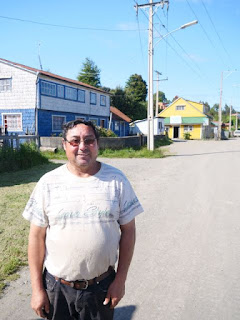
Ignacio wants to know if they will be back???
Stay tuned for Part 2…